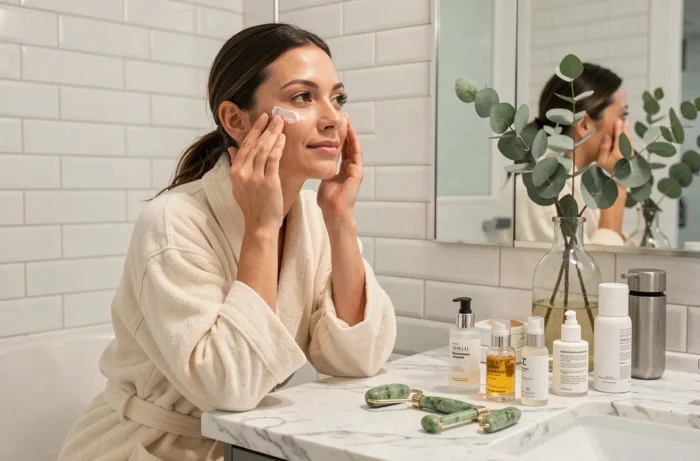
A daily beauty routine relies on formulation, texture, and format choices that evolve each year due to new regulations, discoveries in cosmetology, and changes in consumer habits. In 2026, several trends are significantly altering the composition of products available in France and how they are integrated into daily life.
Ban on PFAS in cosmetics: what the law changes in your skincare
The French law n° 2025-188 prohibits, starting January 1, 2026, the manufacture and sale of cosmetics containing PFAS (per- and polyfluoroalkyl substances). These compounds were used to stabilize textures, improve the wear of certain long-lasting foundations, or make creams more water-resistant.
As a result, brands have had to reformulate popular products. Waterproof foundations, certain mascaras, and sunscreens have seen their compositions change. For consumers, this sometimes translates to a slightly different texture or altered wear, without compromising the overall effectiveness of the product.
Before purchasing a facial care or makeup product, checking the INCI list remains the most reliable reflex. PFAS appeared under names like PTFE or perfluorononyl dimethicone. Their absence from the list confirms the product’s compliance. To discover Pop Your Beauty in beauty, a selection of skincare and makeup adapted to the new regulatory requirements facilitates this transition.
Refillable packaging and solid cosmetics: beauty routines change format
The European regulation (EU) 2025/40, applicable from August 12, 2026, imposes strengthened requirements on the sustainability, recyclability, and reduction of cosmetic packaging. This text accelerates a movement already underway: solid and refillable formats are becoming common options in daily routines.
Solid shampoos, bar facial cleansers, and plastic-free deodorants are gaining market share in France. The French market for solid cosmetics shows steady growth, driven by both ecological and practical motivations (space-saving, longer usage duration).
To integrate these formats without disrupting one’s routine, a few guidelines are helpful:
- A well-formulated solid shampoo lathers less than a liquid but cleanses with the same effectiveness. The adjustment period typically lasts two to three weeks.
- Solid facial cleansers are suitable for normal to combination skin. Very dry skin types may prefer a refillable cleansing balm.
- Refills for moisturizing cream reduce waste volume while maintaining the same formula as the original jar.
This change in format does not sacrifice the quality of care or the pleasure of use. However, it does require rethinking storage and routines: a magnetic soap dish, a drying net, an airtight container for transport.
Multi-skinification: when facial actives are invited onto the body and hair
The term multi-skinification refers to the application of actives and protocols from facial care to other areas of the body, notably the scalp and hands. This approach transforms the beauty routine into a coherent system where each area receives targeted care.
Hyaluronic acid, long reserved for facial serums, is now found in conditioners and hand creams. Niacinamide appears in hair care products aimed at soothing the scalp. Retinol, in adapted concentrations, is included in formulations for the décolleté.
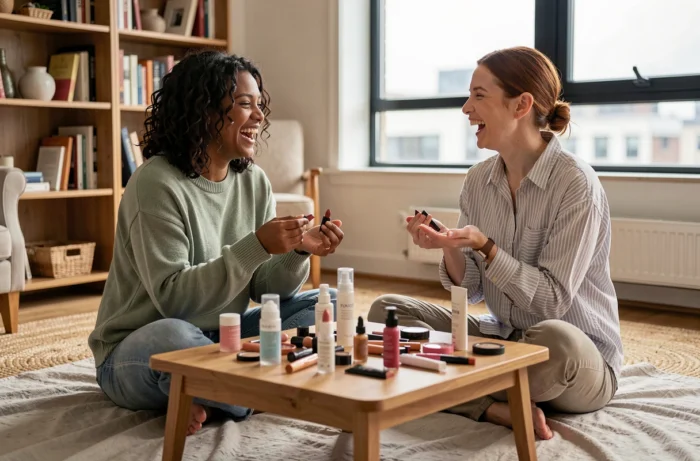
This trend responds to a concrete expectation: to treat signs of aging and dehydration uniformly across the entire body, not just on the face. Evening routines may lengthen slightly, but the results are measured in the texture and radiance of the skin on a daily basis.
A common mistake is using a concentrated facial serum directly on the body without adjusting the amount. The skin surface of the back or legs is much larger, and effective concentrations differ. It is better to opt for products specifically formulated for the body, which incorporate the same actives at appropriate dosages.
Minimalist routine and multifunctional care: saving time without losing effectiveness
Google search data on beauty in France shows that the term “best” has surpassed “new” in queries related to skincare for several years. Consumers prioritize proven effectiveness over novelty. This evolution favors short routines composed of multifunctional products.
A tinted moisturizer with sun protection replaces three distinct products (day cream, foundation, sunscreen). A serum combining vitamin C and niacinamide simplifies the morning treatment step. Makeup follows the same logic: cream blushes also serve as eyeshadow, and tinted lip balms replace traditional lipstick.
Reducing the number of products does not mean reducing attention to the skin. The minimalist routine, on the contrary, imposes a more rigorous selection:
- Identify your skin type (oily, dry, combination, sensitive) to choose an appropriate moisturizing base rather than an entire range.
- Favor a gentle cleanser morning and night rather than multiplying daily double cleansing steps.
- Reserve specific treatments (masks, exfoliants, concentrated serums) for one or two applications per week, targeting a specific need.
This approach also reduces the monthly beauty budget and limits waste from opened products that are then abandoned at the back of a drawer.
The beauty routine of 2026 is therefore built around three concrete axes: formulations compliant with the new bans (PFAS), formats that meet European environmental requirements, and a holistic approach to care that goes beyond just the face. Choosing fewer, better-formulated products in sustainable formats remains the most reliable guiding principle for an effective beauty daily routine.