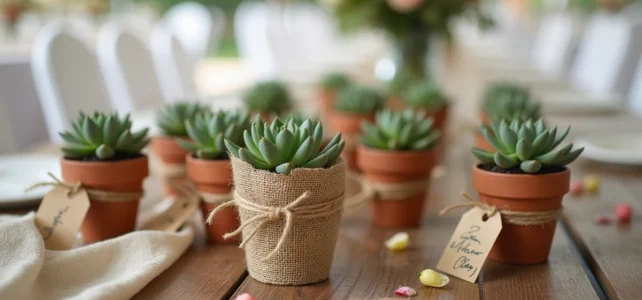
Giving a plant as a wedding gift means choosing a living present whose lifespan exceeds that of any candy. However, the choice of species influences how the gesture is received: ease of care, bulkiness when returning from the celebration, compatibility with an interior or balcony. This article compares ten original plants to give as a wedding gift based on concrete criteria: resilience, symbolism, suitable format for an event, and decorative potential after the big day.
To explore in detail which plants to give for a wedding on MB Mariage, the selection criteria vary according to the season, the venue, and the profile of the guests.
| Plant | Care | Gift Format | Animal Tolerance |
|---|---|---|---|
| Hoya kerrii | Low | Mini pot | Non-toxic |
| Monstera deliciosa variegata | Moderate | Medium pot | Toxic |
| Fern Kokedama | Moderate | Suspended sphere | Non-toxic |
| Dwarf Olive | Low | Medium pot | Non-toxic |
| Neon Syngonium | Low | Mini pot | Toxic |
| Silver Pothos | Very low | Mini pot | Toxic |
| Potted Lavender | Low | Individual pot | Non-toxic |
| Veined Anthurium | Moderate | Decorative pot | Toxic |
| Planting Pencil | None (seeds) | Single | Non-toxic |
| Dwarf Citrus (kumquat) | Moderate | Medium pot | Non-toxic |
1. Hoya kerrii, the heart-shaped leaf
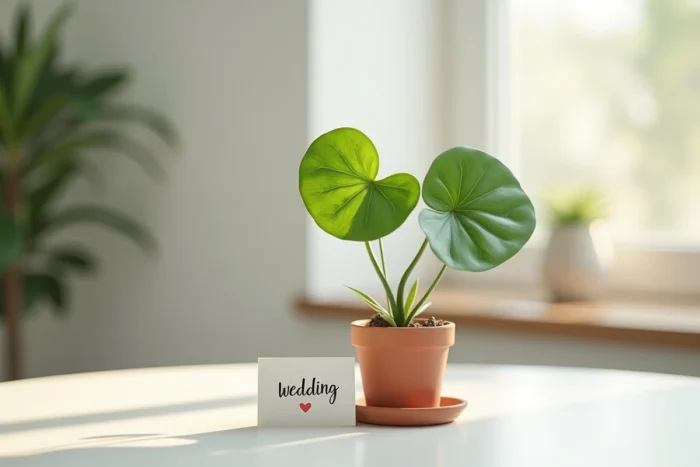
The hoya kerrii stands out with its unique heart-shaped leaf, a symbol that speaks for itself at a wedding. Presented in a mini individual pot, it easily fits on each table or in a gift bag.
Its care consists of watering every two weeks. The hoya kerrii is non-toxic to cats and dogs, a rarely mentioned but crucial criterion when giving a plant to households with pets.
2. Monstera deliciosa variegata, the designer plant
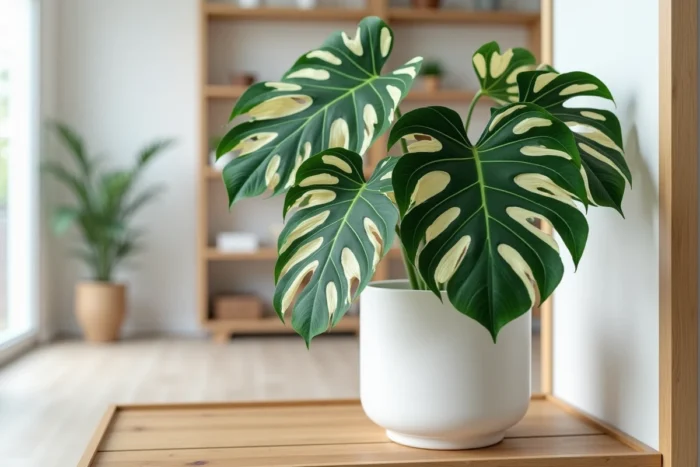
The variegated monstera has been one of the trendy indoor plants since 2024, popularized by social media and specialty shops. Its marbled white and green foliage gives it a strong decorative character.
However, it requires sustained indirect light and is toxic to pets. Better suited as a gift for witnesses or close friends than as a keepsake given to every guest, given its size and price.
3. Fern Kokedama, the suspended plant sphere
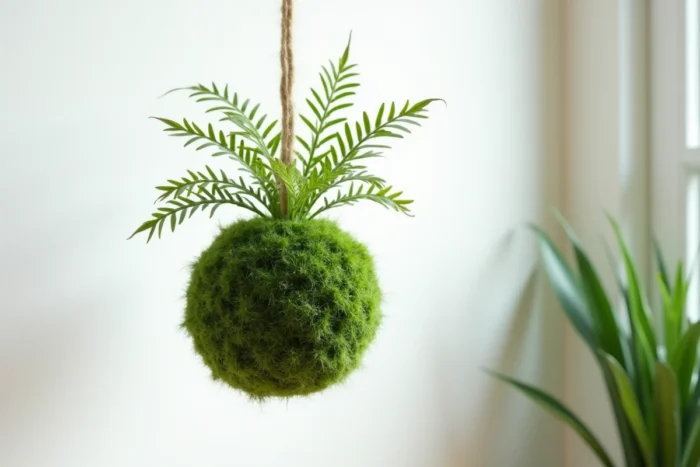
The kokedama transforms a plant into a sculptural object: the ball of soil wrapped in moss can be suspended or placed on a tray. The fern is particularly well-suited to this format due to its drooping fronds.
Its lifespan depends on regular soaking in water, about once a week. Ferns are non-toxic, which broadens the recipient profile. The kokedama also serves as a table decoration during the reception before being taken home.
4. Dwarf Olive, the Mediterranean souvenir
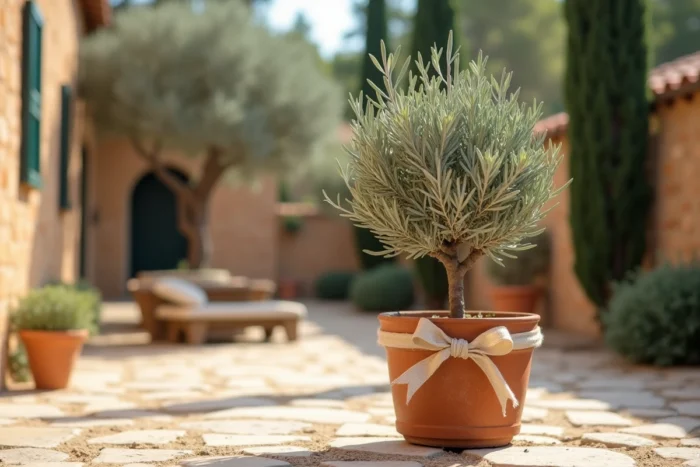
The dwarf olive naturally fits into the ambiance of an outdoor wedding or a reception in a citrus garden. Its exceptional longevity makes it a symbol of lasting commitment.
Resistant to drought, it tolerates missed waterings and adapts well both on a terrace and in a bright indoor space. Its size remains compact for a tree, but it weighs more than a mini pot. Plan for suitable packaging so that guests can transport it easily.
5. Neon Syngonium, the bright pink foliage
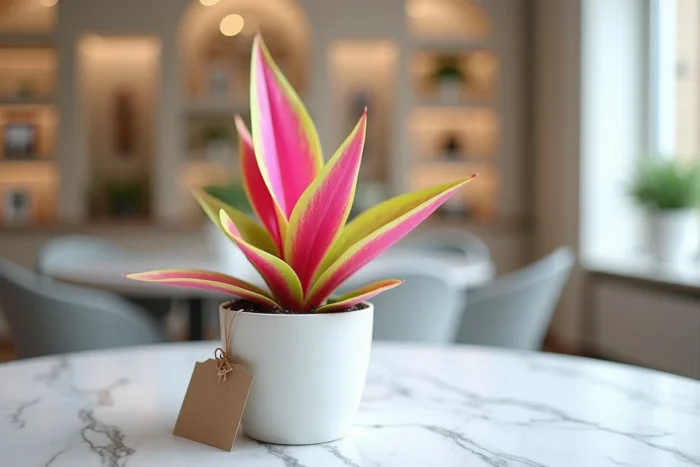
The neon syngonium catches the eye with its deep pink leaves that contrast with classic greens. Its rapid growth provides visible results in just a few weeks, enhancing the feeling of a living gift.
It tolerates low-light interiors and requires moderate watering. Unlike the hoya, the syngonium is toxic if ingested, a point to note on a small card attached to the pot if guests have young children or pets.
6. Silver Pothos, the nearly indestructible gift
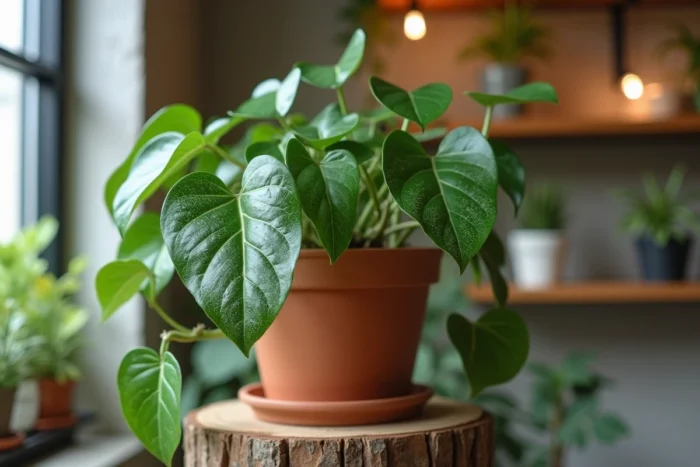
The silver pothos (scindapsus pictus) displays metallic reflections on deep green foliage. Its robustness makes it a plant that survives prolonged forgetfulness in watering and dark apartments.
Ideal in a mini pot or as a cutting presented in a glass tube. It lends itself well to personalization with a tag engraved with the names of the couple.
7. Potted Lavender, the scent of Provence
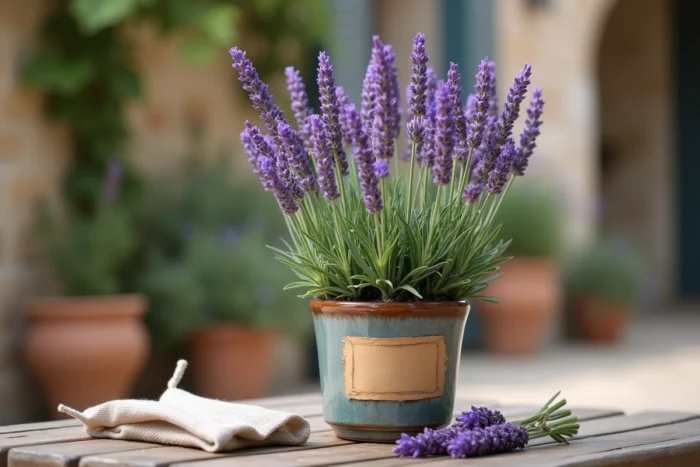
Lavender adds an olfactory dimension absent from the other plants on this list. Its scent immediately evokes Provence and summer celebrations.
Offered in a small individual pot, it can then be replanted in the ground or kept on a balcony. Non-toxic and heat-resistant, it is suitable for summer weddings. Its mauve flowering also creates a chromatic reminder with the table decoration.
8. Veined Anthurium, the graphic piece
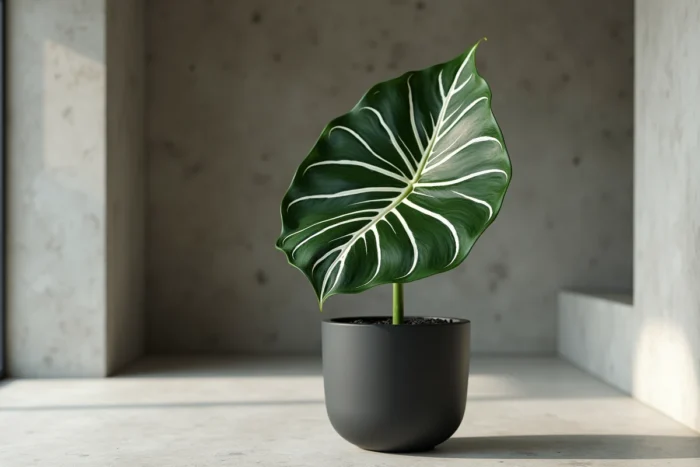
The veined anthurium (anthurium clarinervium, for example) captivates with the sculptural aspect of its dark heart-shaped leaves crossed with white veins. It is a gift that stands out from the usual wedding registers.
It requires proper ambient humidity and filtered light. Its size remains manageable in a compact decorative pot. Like the monstera, its toxicity means it should be reserved for an informed audience.
9. Planting Pencil, the symbolic gesture with zero bulk
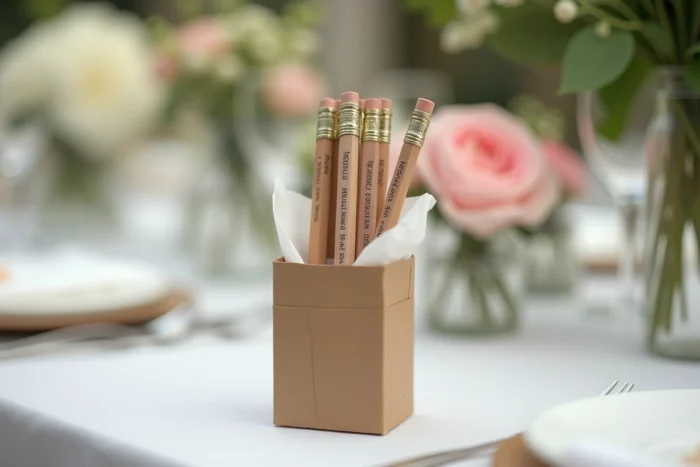
The planting pencil contains seeds in its capsule: once the pencil is too short to write, it can be planted in the ground. It is the lightest and least cumbersome format for guests who are traveling.
- Basil, sunflower, forget-me-not, or poppy seeds depending on the manufacturers
- Very affordable unit cost, suitable for large events
- Customizable with the couple’s names and the date
The planting pencil works best as a complement rather than a standalone gift: paired with a seeded card or a sachet of seeds, it reinforces the plant identity of the wedding without overloading the guests.
10. Dwarf Kumquat, the gift that bears fruit
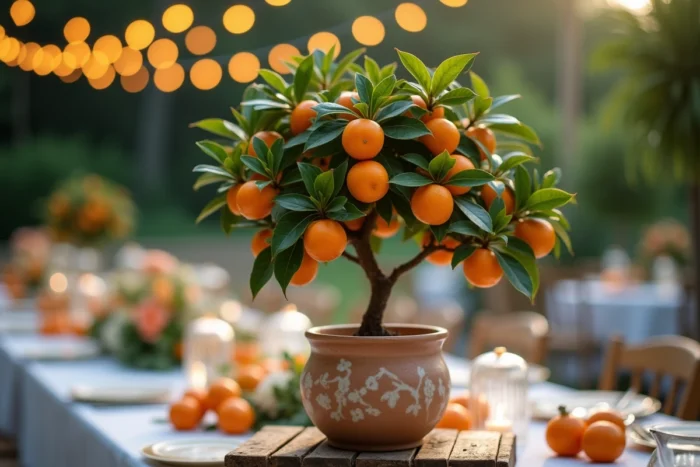
The dwarf kumquat combines the appeal of a small fruit tree with a pot format compatible with a windowsill. Its miniature orange fruits can be eaten whole, skin included.
Non-toxic and tolerant of growing in bright indoor spaces, it fits into a Mediterranean or rustic wedding. Its weight and volume are similar to the dwarf olive: it is better reserved for the honor tables or close friends rather than for general distribution.
- Regular watering without excess, well-drained substrate
- Fruiting possible from the first year indoors
- Paired with a personalized cache-pot, it becomes a lasting keepsake
The choice between these ten plants mainly depends on the number of guests, the budget per unit, and the profile of the attendees. Mini formats (hoya, syngonium, pencil) are suitable for large tables, while the olive, kumquat, or variegated monstera are aimed at a smaller circle. Checking toxicity remains the most useful reflex before finalizing the order.