
The cervico-uterine smear remains the reference sample for screening cervical abnormalities, but the nature of the laboratory analysis is evolving. We are observing a gradual shift towards high-risk HPV testing as the preferred screening method, which alters the recall intervals and follow-up logic. Properly preparing this sample is crucial for the reliability of the result, regardless of the type of analysis requested.
HPV Test and Cytology: What Changes for Smear Preparation
The European recommendations published in 2025 by the European Commission Initiative on Cervical Cancer position the high-risk HPV test as the only recommended method for routine screening. Conventional cytology (classic smear read under a microscope) now plays the role of a triage test, performed on the same sample when the HPV test returns positive.
In practice, the sampling procedure remains the same for the patient: spatula or swab on the cervix. The difference occurs downstream, in the laboratory. A negative HPV test extends the screening interval, often to five years, compared to three years in the previous cytological scheme. This means that the quality of the sample becomes even more critical: a poorly prepared sample can invalidate a result meant to cover several years of follow-up.
We recommend checking with the healthcare professional whether the sample will be analyzed in cytology only, in HPV testing, or in co-testing. This information guides the advice before a medical smear that the practitioner will tailor to the type of analysis planned.
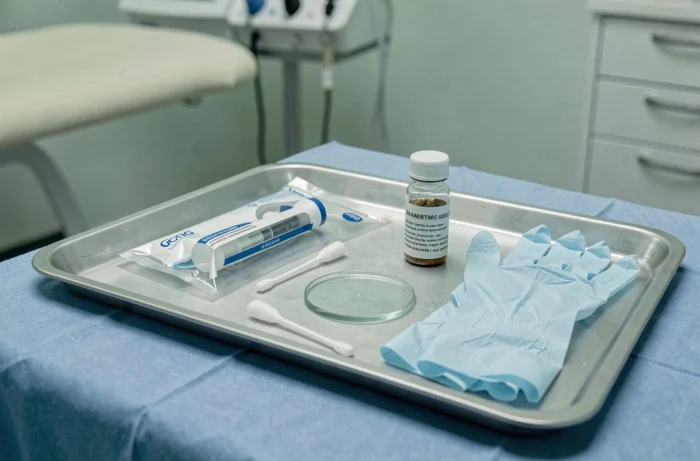
Optimal Conditions for Cervical Sampling: Technical Parameters
An exploitable cervico-uterine sample relies on the absence of interfering factors at the time of sampling. The ideal window is mid-cycle, outside of any menstrual period. Bleeding, even light, dilutes the cellular sample and complicates interpretation in both cytology and molecular biology.
Factors to Avoid in the 48 Hours Prior to Sampling
- Sexual intercourse, which causes mechanical desquamation of the cervix and alters the local vaginal flora, affecting the representativeness of the collected cells.
- The use of creams, suppositories, lubricating gels, or spermicides, whose excipients can mask the cells during cytological reading or interfere with viral DNA extraction in HPV testing.
- Vaginal douching or internal irrigations, which eliminate some of the superficial cells from the cervix and reduce the cellular load available for analysis.
Current local antibiotic treatments or vaginal antifungals are grounds for postponement. We observe that this point is rarely communicated to patients when making appointments, even though it can render a sample unusable.
Inflammation and Active Infections
An inflammatory state of the cervix (cervicitis, vaginitis) generates an influx of polymorphonuclear cells that mask the epithelial cells to be analyzed. The cytological result often returns as “uninterpretable” or “to be redone.” Treating any symptomatic vaginal infection before scheduling the smear avoids an unnecessary sample and an additional delay in the screening process.
HPV Self-Sampling: A New Screening Option for Cervical Cancer
The recent trend towards vaginal self-sampling for HPV detection changes access to screening. Several European programs now offer self-sampling kits sent by mail to women who do not participate in organized screening.
The principle differs from the classic smear: the patient performs a vaginal sample herself using a swab or brushing device, without the need for a speculum or cervical examination. Self-sampling does not allow for cytology, only molecular detection of HPV. In case of a positive test, a classic cervical smear remains necessary for cytological triage.
The preparation conditions remain similar: avoid sexual intercourse and intravaginal products in the 48 hours prior. The main difference lies in the sampling area (vaginal wall versus cervix), making the procedure less demanding but also less targeted on the junction area where most lesions arise.

Smear Results and Actions to Take Based on Diagnosis
The time to obtain results varies by laboratory and type of analysis. An HPV test alone generally returns faster than a double reading of cytology plus HPV. We recommend asking for the estimated time during sampling to avoid unnecessary anxiety.
A normal result in cytology is stated as “absence of abnormal cells.” A negative HPV result means that no high-risk genotype has been detected. In both cases, the next screening follows the recommended interval.
The most common abnormalities are ASC-US (atypical squamous cells of undetermined significance), which do not indicate the presence of cancer but trigger a reflex HPV test or close monitoring. An LSIL or HSIL result will lead to a colposcopy for direct examination of the cervix under magnification, possibly with a targeted biopsy.
Vaccination against HPV (Gardasil 9 covers nine genotypes) does not exempt from screening. It reduces the risk of lesions related to the covered genotypes, but vaccinated women must maintain the same smear or HPV test schedule as unvaccinated women. This point remains a frequent source of confusion in gynecological follow-up.
The cervical cancer screening pathway relies on the regularity of samples and the technical quality of each examination. Knowing the type of analysis prescribed, respecting the preparation conditions, and understanding the significance of results helps avoid unusable samples and diagnostic delays.