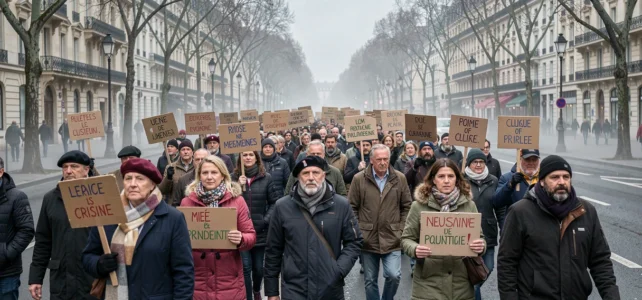
Social movements in France are no longer limited to union parades and national strike days. In recent years, forms of mobilization have diversified, incorporating digital tools and significantly exceeding the traditional framework of social conflict at work. Measuring these transformations requires comparing action channels, mobilized audiences, and the political responses they elicit.
Digital Infrastructure of Citizen Mobilizations in France
Classic analyses of social movements focus on the number of demonstrators, strike days, or collective negotiations. They often overlook a central factor: the role of digital platforms in organizing mobilizations.
Platforms like Snapchat and TikTok have served as catalysts during recent gatherings, enabling rapid coordination and a mimetic effect among younger participants. This phenomenon has directly fueled legislative debate.
A bill prohibiting access to social networks for those under 15 was adopted by Parliament on July 21, 2026, with 279 votes in favor and 81 against, making France the first country in the EU to regulate minors’ access to digital platforms in this way.
This text marks a turning point: political regulation no longer solely concerns maintaining order in the streets but also the very infrastructure that allows mobilizations to arise and amplify. Initiatives like those documented on lameche.org illustrate how citizen collectives articulate online presence and local action.
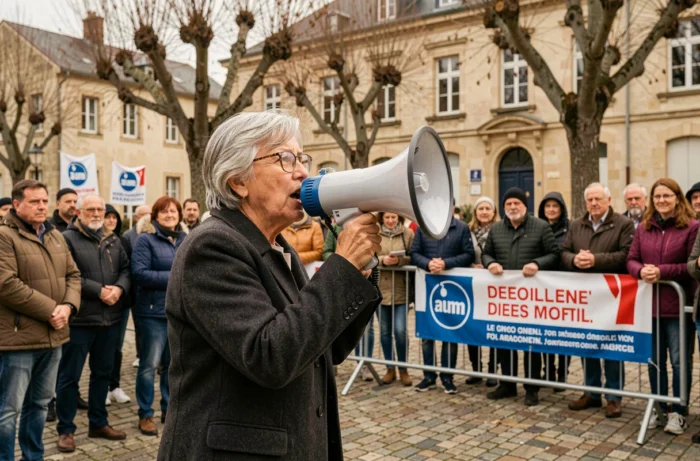
Strikes, Demonstrations, and Petitions: A Comparison of Action Forms
Social movements in France use very different channels depending on the objectives and the audiences involved. Comparing these forms of action allows for a better understanding of how civil society influences political debate.
| Form of Action | Dominant Audience | Timing | Direct Political Impact |
|---|---|---|---|
| Sectoral Strike | Unionized employees (transport, education, health) | Occasional or renewable days | Negotiations, withdrawal or amendment of bills |
| Street Demonstration | Broad (unions, associations, non-affiliated citizens) | Event-based, sometimes recurring (Saturday) | Media pressure, sometimes government retreat |
| Online Petition | Connected citizens, all generations | Ongoing, gradual accumulation | Parliamentary agenda if threshold reached |
| Local Citizen Reserve | Residents trained for crisis situations (climate, disasters) | Permanent, activated in case of crisis | Direct cooperation with local authorities |
The strike remains the historical lever of the French social movement. Major mobilizations, from 1936 to May-June 1968, and more recently against pension reforms, have structured the balance of power between employees and political authority.
In contrast, online petitions have become a fully-fledged tool for citizen pressure on public debate. They allow non-unionized citizens to influence the parliamentary agenda without going through the traditional channels of representative democracy.
Citizen Reserves and Climate Mobilizations: Unprecedented Forms of Engagement
The rise of local citizen reserves represents a recent phenomenon distinct from classic social movements. These groups of volunteers, trained for crisis situations related to climate change, collaborate directly with local authorities. Their approach is not protest-oriented: it is based on cooperation and anticipation.
These citizen reserves reflect a shift from protest to preventive action. While a demonstration aims to block a bill or denounce a policy, the citizen reserve offers an operational response to a concrete threat (flooding, heatwave, wildfires).
This model is part of the continuity of proposals arising from the Citizen’s Climate Convention, which aimed to support employees and businesses in the ecological transition. Climate mobilization in France has thus produced two parallel branches:
- A protest branch, with demonstrations and civil disobedience actions led by environmental collectives, targeting major infrastructure projects or energy policies
- A cooperative branch, embodied by citizen reserves and local conventions, which seeks to build responses with institutions rather than against them
- A digital branch, where anti-free speech groups or, conversely, citizen monitoring collectives are identified and tracked by intelligence services, indicating that the online space has become a fully-fledged area of mobilization

Protest Democracy and Political Response in France
France stands out in Europe for the intensity of its protest tradition. Demonstrations are a common form of political expression, sometimes referred to as “street democracy.” This specificity has direct consequences on how political power responds to mobilizations.
Responses oscillate between two logics. The first is partial concession: withdrawal or amendment of a bill under street pressure, as has occurred several times regarding labor or education reforms. The second is the regulation of the mobilization channels themselves, as illustrated by the law on minors’ access to social networks.
Unlike countries where parliamentary petitions structure the dialogue between citizens and elected officials, France has long favored direct power relations. Online petitions are beginning to alter this balance by offering a less confrontational but measurable channel, with signature thresholds triggering examination by the National Assembly committees.
The French social movement is fragmenting into complementary rather than competing channels. Strikes, demonstrations, digital petitions, and citizen reserves now coexist, each responding to a different type of demand and citizen profile. The most telling data of this evolution remains the vote on July 21, 2026: for the first time, the legislator targeted not the demonstrators, but the tool that enables them to coordinate.