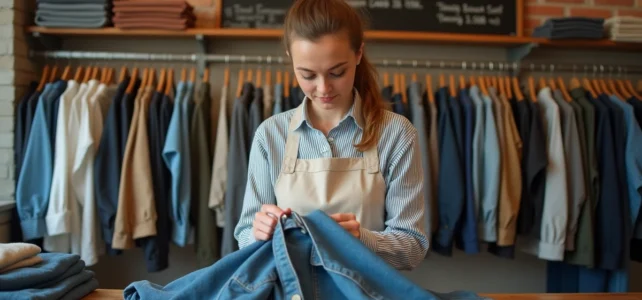
A wardrobe overflowing after a seasonal change, pieces still in good condition but no longer matching your style: this situation is common. Selling clothes allows you to free up space while recouping part of your initial investment, provided you properly prepare each item before offering it.
Condition of clothes before resale: what influences the price
It is often thought that the brand alone guarantees a good resale price. In practice, the actual condition of the garment weighs as much as the label. A designer jean with a frayed hem or a poorly treated stain will be systematically downgraded, sometimes even rejected.
Before dropping off your items, review them with a critical eye. A missing button can be replaced in two minutes and can make the difference between a rejection and a resale. Deodorant marks on the armpits of a blouse, even if slight, signal a lack of care to buyers.
Regarding selling clothes at Ding Fring, the criteria focus on cleanliness, the absence of visible defects, and consistency with the current season. This approach is found at most specialized resale stores.
Feedback varies on this point, but keeping brand and composition labels significantly increases the confidence of resellers. These labels serve as proof of authenticity and provide information about the materials, which reassures about quality.
In-store resale or online selling: choose based on your available time

The choice between dropping off your clothes at a resale store and selling them yourself online depends on a simple constraint: the time you can dedicate to it.
Direct resale in-store
Resale stores like organized thrift shops or consignment stores offer cash payment or store credit. You drop off a lot, sorting is done on-site, and you leave with a sum or a credit. Direct resale is suitable when you want to clear out a wardrobe in one visit.
The unit price per item will be lower than in direct sales between individuals. This is the compromise: less margin, but zero management of listings, messages, and shipping.
Online resale between individuals
Resale platforms allow you to set your price and reach targeted buyers. The trade-off is heavy in time:
- Photograph each item from multiple angles, ideally on a hanger and in natural light
- Write a precise description (size, material, possible defects, measurements of the garment laid flat)
- Manage negotiations, follow-ups, and postal shipments for each sold item
For a whole wardrobe, we’re easily talking about several hours of accumulated work. If you have about twenty items to sell, combining in-store resale for volume and online selling for high-value pieces remains the most profitable approach.
Seasonal sorting and timing of resale to maximize resale value
Offering a wool coat in the middle of July halves its resale value. Resale stores and online buyers are looking for pieces they can wear or resell immediately.
Plan about a month and a half in advance. Prepare summer pieces in April, winter pieces in September. This timing corresponds to when demand starts to rise without the market being saturated with supply yet.
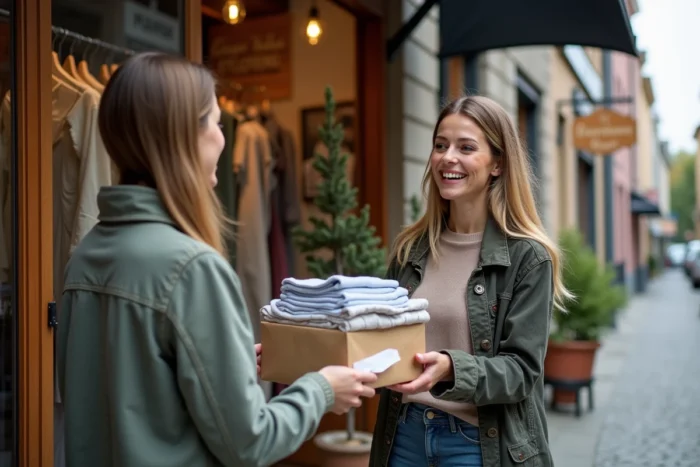
At the time of sorting, separate your clothes into three categories:
- Items that can be resold as-is (good condition, identifiable brand, appropriate season)
- Items that can be repaired and would gain value after minor alterations (hem, button, small tear)
- Items too worn for resale, to be directed to textile collection bins for recycling
This sorting avoids wasting time proposing items that will be rejected. It also allows you to identify pieces that deserve a small investment in alterations before putting them up for sale.
Textile regulation and second-hand: what changes for sellers
Since January 1, 2025, French companies must sort their textile waste separately to facilitate reuse and recycling. This obligation creates new sources of supply for resale structures, with uniforms and professional textiles now feeding into the second-hand market.
On the legislative side, France has adopted a law targeting ultra-fast fashion. New clothes at very low cost are expected to become more expensive and less visible, which mechanically reinforces the value of well-maintained second-hand items. For individuals reselling, this regulatory trend plays in favor of the second-hand market.
Circular fashion in Europe is entering a phase of maturity, driven by the extension of Extended Producer Responsibility (EPR) to the textile sector. In practical terms, brands are funding more collection and reuse channels, which multiplies the accessible resale points for individuals.
Whether you go through a resale store, an online platform, or a consignment shop, preparation remains the main lever. A clean garment, with its labels, presented in the right season and in good condition will always sell better than a neglected piece, regardless of its brand. The second-hand market rewards those who treat their clothes as products, not as waste.