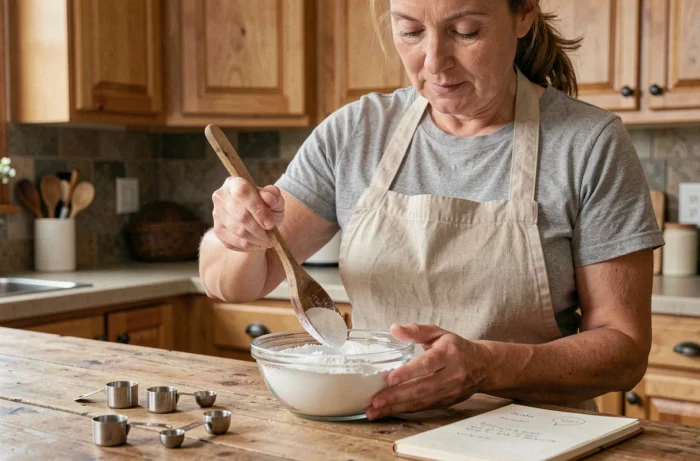
Baking soda, the one that sits in almost every kitchen cupboard, can produce a dense plume of white smoke when combined with the right ingredients. Making a smoke bomb with baking soda requires little equipment, but some chemical and legal precautions deserve attention before pulling out the pot.
Chemical role of baking soda in a homemade smoke bomb
Have you ever seen baking soda react with vinegar in a children’s science volcano? The principle of a smoke bomb relies on a similar logic, but with added heat. When baking soda (NaHCO3) is heated, it decomposes, releasing carbon dioxide and water vapor. These gases dilute the combustion and slow down the burning rate of the mixture.
Without baking soda, a mixture of potassium nitrate and sugar burns too quickly. The smoke is thin, and the reaction escalates. Baking soda acts as a moderator: it extends the burning duration and makes the plume thicker, slower, and more visible.
This is why homemade smoke bomb recipes systematically include it in small quantities. Too much baking soda smothers the reaction. Not enough, and the mixture burns up in seconds without producing usable smoke. For those who want to delve deeper into the subject, it is possible to make a smoke bomb with Ceze by following detailed explanations on the chemistry of the reaction.
Proportions and ingredients for a baking soda smoke bomb
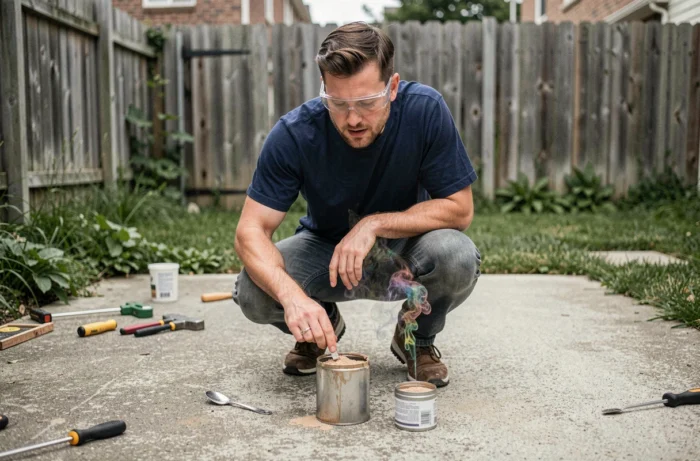
The base of a homemade smoke bomb relies on three common components. Each plays a distinct role in the reaction.
- Potassium nitrate (KNO3): this is the oxidizer, providing the necessary oxygen for combustion. It can be found under the name saltpeter in hardware stores or garden centers.
- Powdered sugar (sucrose): it serves as the fuel. When heated, it caramelizes and then decomposes, fueling smoke production.
- Baking soda (NaHCO3): the regulator. It prevents the mixture from burning all at once and generates the gases that thicken the plume.
The dosage that appears most frequently in amateur chemistry sources places potassium nitrate as the major component, followed by sugar, and then baking soda in significantly smaller amounts. The proportion of baking soda remains minor, on the order of a small fraction of the total mixture.
Cold or hot mixing
Two methods exist. The first involves mixing the dry powders and then packing them into a cardboard tube with a fuse. The second, more common in tutorials, involves cooking over very low heat.
In the pot, the sugar melts and binds the other components into a homogeneous paste. The heat must remain minimal: as soon as the mixture browns beyond a light caramel, the reaction can escalate. Cooking lasts only a few minutes. The paste is then poured into a mold (toilet paper roll, cardboard cup) around a fuse or a string coated with wax.
Colored smoke bomb with baking soda: what really works
The white smoke produced by the basic mixture is not always what video or photo enthusiasts are looking for. To achieve color, an organic powder dye must be added to the mixture before cooking.
Textile dyes in powder form yield visible results, provided they are generously dosed. According to documented online experiences, blue and orange hues produce the clearest plumes. Red and green are more capricious: the dye sometimes burns before coloring the smoke.
A point often overlooked: the dye must withstand heat without degrading. Liquid food colorings, being too diluted and water-based, have no effect. Only dry, heat-resistant pigments provide real coloration to the plume.
Safety and legal framework for homemade smoke bombs in France
Online tutorials rarely address the legal aspect. The situation has recently changed in France with the RIPOST law, largely validated by the Constitutional Council in August 2026. This text strengthens the regulation of the purchase and transport of pyrotechnic articles and precursors to explosives, with specific criminal penalties.
In practical terms, a prefect can now order a person to dispose of explosive products or pyrotechnic articles when their use is deemed likely to cause serious disturbances to public order. The obligations for classification, traceability, and recording the identity of buyers for certain categories of articles remain fully in effect.
Practical precautions not to be overlooked
A homemade smoke bomb remains a combustion device. Even if it’s homemade, it produces irritating gases and localized heat.
- Always operate outdoors, in an open space, away from any dry vegetation. During dry periods, several French departments explicitly prohibit any use of fires or pyrotechnic articles by individuals.
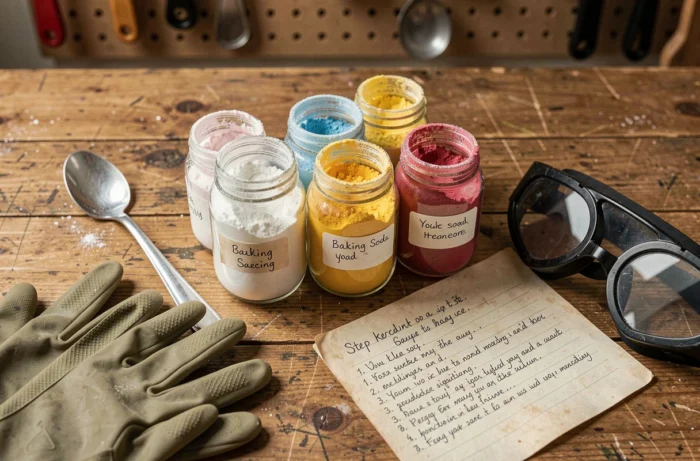
- Wear heat-resistant gloves while cooking the mixture. The caramel from potassium nitrate sticks to the skin and causes deep burns.
- Never lean over a lit smoke bomb. Direct inhalation of the smoke, even white, irritates the respiratory tract and eyes.
- Have a bucket of water or a fire extinguisher nearby, especially if the smoke bomb is used for photography or video in a semi-urban environment.
The line between playful DIY and criminal offense has tightened since the enactment of the RIPOST law. Making a smoke bomb at home for occasional personal use is not prohibited as such, but storing certain oxidizing substances in quantity, transporting, or using them in public spaces may fall under this legislation.
Before starting the cooking process, checking the current prefectural orders in your department remains the most useful, and least spectacular, reflex of the entire preparation.