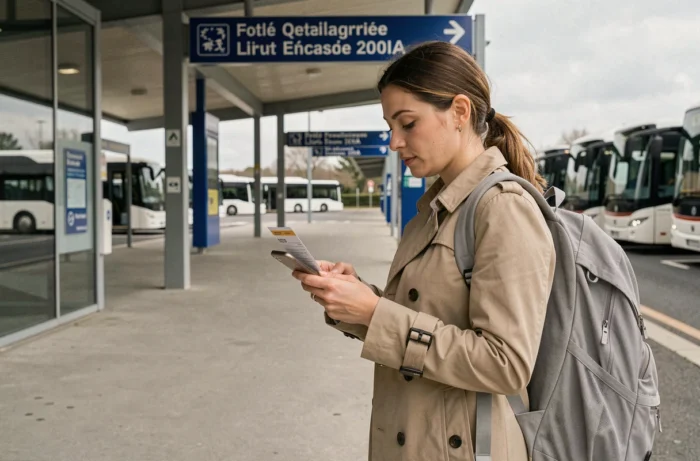
A bus trip from Lyon to Marseille booked three weeks in advance often costs two to three times less than the same journey by train. Bus travel in France is appealing due to its tight fares, but the organization requires some habits that regular train users may not always have. Bus stations are sometimes located far from the city center, travel times vary depending on the companies, and there are traffic restrictions in certain metropolitan areas: you save time (and money) by preparing your itinerary methodically.
Low Emission Zones and Buses: A Constraint That No One Checks Before Leaving
When organizing a private coach trip (association, school group, company committee), the issue of Low Emission Zones (LEZ) almost always gets overlooked. Low emission zones do not only concern cars: buses and coaches have their own Crit’Air thresholds, sometimes stricter than those applied to light vehicles.
In Nice, for example, an order from April 2025 lifted restrictions for cars, motorcycles, and light utility vehicles, but Crit’Air 4 or 5 buses and coaches remain prohibited. In Rouen, Crit’Air 4 buses should no longer operate since September, although actual enforcement on the ground varies. Each metropolitan area sets its own rules, schedules, and exemptions.
Before booking a group vehicle, it is essential to check the Crit’Air class of the proposed coach and the restrictions in place in the destination metropolitan area. Regular companies (FlixBus, BlaBlaCar Bus) manage this compliance internally, but for a rental with a driver, it is the organizer’s responsibility to ensure that the vehicle can enter the LEZ. A forced detour upon arrival or a fine quickly undermines the savings made on transport.
To compare offers from major companies and find lines suitable for your journey, the aggregated results on voyagenbus.com allow you to cross-reference schedules, prices, and operators on the same route.

Booking a Bus Ticket in France: The Right Timing and Good Habits
Long-distance bus companies operate on a yield management model similar to that of airlines. The earlier you book, the lower the price. On very busy routes like Paris-Lyon or Toulouse-Bordeaux, booking two to three weeks before departure often cuts the price in half compared to purchasing the day before.
Some practical habits at the time of booking:
- Compare departure and arrival times, not just the price. An overnight trip may seem economical, but a departure at 11 PM with an arrival at 5 AM at a closed bus station poses a real logistical problem.
- Check the exact location of the bus station or stop. In Paris, departures are made from Bercy, Gallieni, or Porte Maillot, depending on the company, which are not located in the same area at all.
- Look at the baggage policy: some companies charge for a second checked bag, while others include it. For a group trip, this changes the overall budget.
Feedback on punctuality varies by route and time periods. Overnight trips in Europe sometimes show more pronounced delays at borders, while short domestic connections (less than four hours) generally stick to their schedules.
Comfort on Board a Long-Distance Coach: What Really Changes the Journey
It is often said that you should bring a travel pillow and headphones. This is true, but the actual comfort mainly depends on choices made before boarding the bus.
The Choice of Seat on the Bus
On most French companies, seats are not assigned at the time of booking. It’s first come, first served. Arriving ten to fifteen minutes before departure is enough to choose a decent seat. Seats at the front offer less vibration and a more stable journey for those prone to motion sickness. The middle rows, window side, remain the best compromise between view and tranquility.
Clothing and Temperature on Board
Air conditioning in a coach is rarely set uniformly. In summer, the temperature can drop significantly below what one expects, especially on overnight trips. A light sweater or thin jacket in your carry-on helps avoid shivering for five hours. In winter, it’s the opposite: the heating combined with a lack of ventilation makes the atmosphere stuffy. Layers that are easy to remove remain the most reliable solution.
Group Bus Travel: Budget, Itinerary, and Coordination
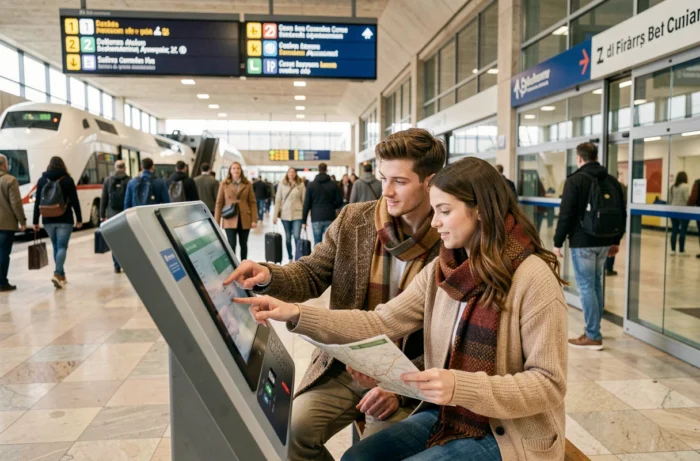
Organizing a bus trip for a group (school, sports, association) involves different constraints than an individual booking. The first reflex is to distinguish between two cases: using a regular line or renting a coach with a driver.
On a regular line, you can sometimes negotiate a group rate starting from about ten passengers, but seats will not be guaranteed next to each other. Private rental costs more per trip, but it offers flexibility on schedules, intermediate stops, and luggage volume.
For private transport, the LEZ compliance of the vehicle becomes the organizer’s responsibility. You should ask the provider for the Crit’Air class of the coach before signing. A Crit’Air 3 coach will pass in most French metropolitan areas today, but the thresholds are regularly tightening.
The often-overlooked expense is parking. Parking a coach in the city center is expensive and authorized spaces are rare. Planning a drop-off point separate from the parking point, and communicating the exact address to the driver as well as the passengers, avoids confusion on the day.
The bus remains the cheapest collective transport per kilometer in France for medium and long distances. With a minimum of preparation regarding the LEZ, schedules, and comfort on board, the journey becomes a step in the trip rather than a chore to endure.