
The baby registry remains one of the most effective tools for coordinating purchases around the arrival of a child. Between online platforms, in-store registries, and cash funds, options have multiplied in recent years. Each format has measurable advantages in terms of budget, flexibility, and management of duplicates. Comparing these parameters before creating a registry helps guide loved ones toward truly useful gifts, without surplus or omissions.
Baby Registry Platforms: Comparison of Available Formats
The choice of medium determines how loved ones participate and the parents’ flexibility regarding selected items. Three main formats coexist today.
| Format | Product Flexibility | Risk of Duplicates | Commission or Fees | Cash Fund Addition |
|---|---|---|---|---|
| In-store registry (baby goods retailer) | Limited to catalog | Low (integrated reservation) | No direct fees | Rarely offered |
| Online multi-retailer registry | Wide (all merchant sites) | Very low (real-time tracking) | Varies by platform | Often integrated |
| Cash fund | Total (free purchase by parents) | None | Bank transaction fees | That’s the principle itself |
In-store registries are suitable for parents who prefer to see and touch products before adding them. However, they limit choice to a single catalog and complicate participation from geographically distant loved ones.
Online multi-retailer platforms offer centralized tracking. Parents can add items from any site, and guests can see in real time what has already been reserved. To explore available options, expectant parents will find concrete references on the baby registry page of Le Paris des Lardons before finalizing their selection.
The cash fund, on the other hand, removes any item constraints. Contributors donate an amount, and parents then purchase according to their actual needs. This format incurs bank transaction fees, but it remains the most suitable for families expecting a second child who already have basic equipment.

Baby Registry Budget: Distributing Items by Price Range
Most competitors advise to “vary the prices.” The real issue is more precise: balancing price ranges so that each loved one can participate, regardless of their budget.
A registry where all items cost over a hundred euros discourages student friends or colleagues who want to make a small gesture. Conversely, a list made up solely of small accessories does not cover heavy items like the crib, mattress, or stroller.
- Low-budget items (under thirty euros): bodysuits, bibs, bath products, developmental toys, cotton swaddles. These items make up the bulk of the registry and allow everyone to contribute.
- Mid-budget items (thirty to a hundred euros): sleeping bags, baby monitors, portable high chairs, sets of bottles, diaper bags. These are the gifts most frequently given by close friends.
- High-budget items (over a hundred euros): stroller, crib, mattress, car seat. These items can be co-funded by several contributors if the platform offers a group participation option.
Group participation on expensive items significantly reduces the parents’ out-of-pocket expenses. This feature, available on most online registries, transforms an individual gift into a collective effort without anyone exceeding their own budget.
Essential vs. Optional Items: What Usage Data Shows
Feedback from parents published on registry platforms reveals a clear gap between what seems necessary at the time of creation and what is actually used in the first months.
High Daily Use Products
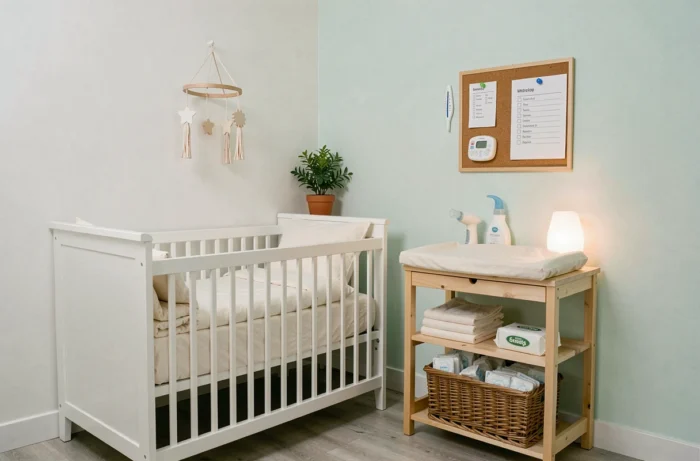
The crib mattress, newborn and one-month bodysuits, diapers (or a diaper subscription), bath thermometer, and a functional changing table are among the items used from day one and for several months. These products deserve a priority place on the registry.
Products Often Overestimated at Creation
The bottle warmer frequently tops the list of purchases deemed unnecessary afterward by breastfeeding parents. “Dressy” outfits in newborn size are worn once, sometimes never. Clothes beyond three months size are more useful than those in newborn size, as infants grow quickly and spontaneously given outfits (outside the registry) are almost always in small sizes.
Developmental items suitable for the first months (mats, arches, contrast rattles) are, however, underrepresented on registries even though they are used daily from the first weeks.
Creating Your Baby Registry at the Right Time: The Effective Calendar
The timing of creation and sharing directly influences the quality of contributions received. Too early, parents have not yet identified their true needs. Too late, loved ones have already purchased random gifts.
The fifth or sixth month of pregnancy offers the best compromise. At this stage, the baby’s sex is generally known (if the parents want this information), the room layout begins to take shape, and there is still enough time for the circle to organize.
Sharing should be gradual. Sending the link to the most involved loved ones right at creation, then expanding to the friend and professional circle a few weeks later, prevents the cheapest items from disappearing first.
One last often-overlooked point: updating the registry after the birth to add needs that arise with the reality of daily life (actual clothing size of the baby, chosen type of feeding). Late visitors will find relevant ideas rather than a list that has been stagnant for months.