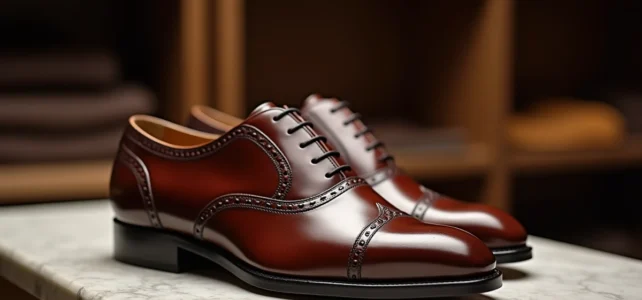
The luxury men’s shoe market is undergoing a period of reorganization. Limited editions, collaborations between brands and designers, and regulatory requirements regarding sustainability are reshaping a segment long dominated by traditional craftsmanship alone. Between old-fashioned tanned leather and technical soles, the lines are moving faster than the muted displays of shoemakers suggest.
Limited Editions and Collaborations: The Real Driving Force Behind High-End Male Purchases
Style guides often highlight the quality of leather or the nobility of Goodyear construction to explain the appeal of luxury shoes. Recent market data tells a different story. According to an analysis of the luxury fashion sector, about 42% of consumers buy high-end shoes each year, and nearly 36% of these purchases are influenced by limited editions.
Organized rarity (drops, capsule collections, one-off collaborations) therefore weighs as much, if not more, than artisanal know-how in the purchasing decision. A model produced in a few hundred copies, co-signed by a designer or a cultural figure, generates an urgency that a classic derby, no matter how well-constructed, does not create.
This phenomenon affects both historic houses and newer brands. Louboutin, for example, has recently been involved in a collaboration with Jordan and Supreme, blurring the line between streetwear sneakers and luxury shoes. To explore high-end luxury men’s shoes that mark this trend, one must look beyond traditional catalogs and follow drop calendars.
Field reports diverge on one point: does this logic of rarity create lasting loyalty or does it foster a cycle of compulsive buying, which is not compatible with the image of a product designed to last for years?
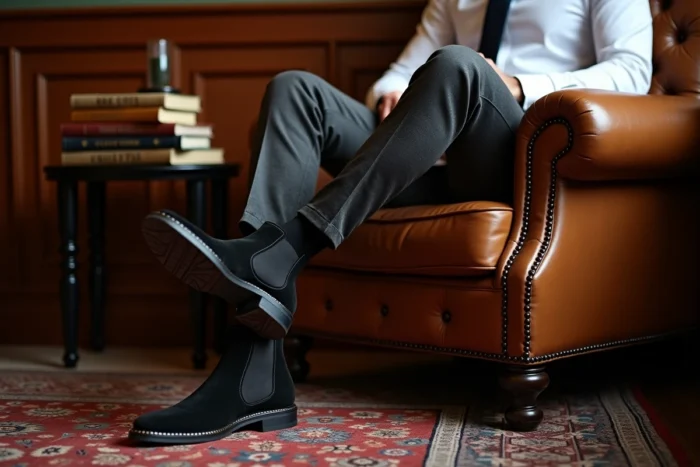
Sustainability and Regulatory Transparency: What Men’s Luxury Fashion Must Change
The high-end segment is not exempt from the obligations of traceability and environmental reporting that are strengthening in Europe. Trends in ready-to-wear for 2026 highlight a regulatory transparency imperative and a transition towards a circular economy: traceability of raw materials, management of product end-of-life, reduction of carbon footprint at every stage of the chain.
For a handmade calf leather shoe, this concretely means being able to document the origin of the leather, the tanning processes used, and the production conditions in the workshop. Brands that do not prepare for this risk falling out of sync with the expectations of a clientele increasingly attentive to these criteria.
Sustainable Materials and Alternatives to Traditional Leather
Sustainability in luxury footwear is not limited to placing an “eco-friendly” label on a box. Several concrete axes are emerging:
- Vegetably tanned leathers, chrome-free, sourced from certified supply chains where livestock is traced back to the original farm
- Natural rubber or recycled material soles, gradually replacing synthetic compounds derived from petroleum
- Resoling and repair programs offered by the brand itself, extending the lifespan of the shoe well beyond the average
These initiatives come at a cost. They are reflected in the final price, raising the question of the accessibility of a product already positioned in a high segment. The available data does not yet allow for measuring whether this “responsible” upgrade hinders or stimulates sales.
Technical Comfort and Aesthetic Codes: The Dual Requirement of Men’s Shoes
A luxury shoe that hurts the foot remains a bad shoe, regardless of its price. The current trend pushes manufacturers to integrate comfort technologies (ergonomic insoles, memory foam, flexible shanks) without sacrificing the sleek silhouette that distinguishes a high-end model from a standard comfort shoe.
The challenge is to make the technicality invisible. An Italian leather oxford should not resemble a sports shoe, even if it discreetly borrows some cushioning principles. Brands that achieve this balance attract a clientele that wears their shoes daily, not just on formal occasions.
Oxford, Derby, Loafer: Which Model for Which Use
The choice of model depends less on current fashion than on the real context in which the shoe will be worn. Here are some concrete guidelines:
- The oxford (closed lacing) remains the most formal model, suitable for strict professional environments and ceremonies
- The derby (open lacing) offers more versatility and adapts well to both a suit and chinos, making it the most common choice for a first high-end purchase
- The loafer, without laces, is suitable for semi-formal contexts and warm seasons, but its perception varies according to dressing cultures
- The luxury sneaker, propelled by collaborations and drops, blurs categories and establishes itself in contexts where classic shoes reigned alone a decade ago
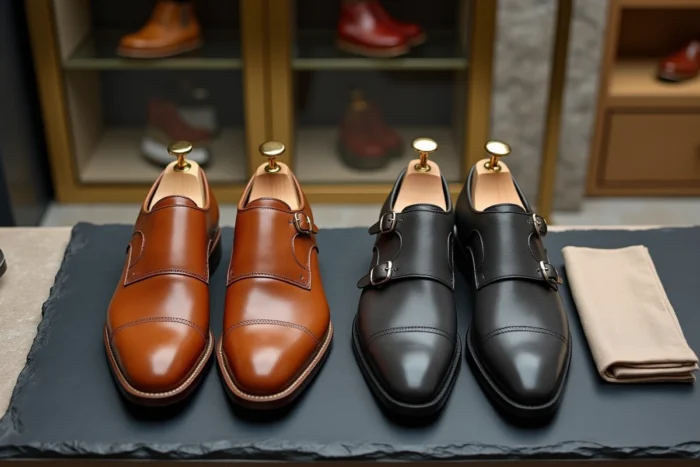
Leather and Patina: What Truly Distinguishes a High-End Shoe
The quality of leather is verified over time, not in the store. A well-nourished full-grain leather develops a unique patina after several months of wear, whereas corrected or coated leather cracks and loses its appearance. It is this ability to age while gaining character that separates a luxury shoe from a product that is simply expensive.
The type of tanning plays a direct role in this aging. Vegetable tanning, which is slower and more expensive, produces leather that breathes better and patinas more evenly than chrome tanning, which is faster but less predictable over time.
A luxury shoe is judged over five years, not five minutes. The thickness of the leather, the consistency of the stitching, the strength of the construction—all of this is only revealed through use. Online photos and marketing descriptions will never replace the physical examination of the product, the feel of the leather, the flexibility of the sole upon bending.
The luxury men’s shoe market finds itself at a crossroads between artisanal heritage, regulatory pressure, and marketing rarity logic. The most informed buyers are those who can distinguish, behind the price and the brand name, the reality of the leather, the construction, and the durability of the product they hold in their hands.