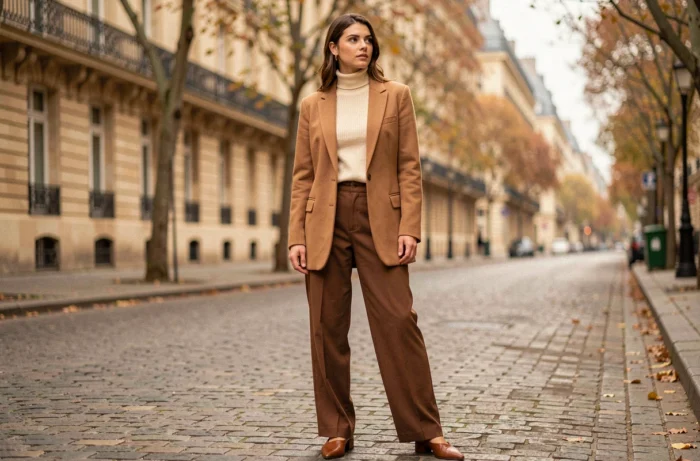
This season’s fashion is defined less by an avalanche of micro-trends and more by a refocus on durable pieces, traceable materials, and silhouettes designed to last several years in a wardrobe. The European regulation ESPR, which came into effect in July 2024, places textiles among the priority families of eco-design, prompting brands to reduce the volume of their collections and favor recurring capsules over accelerated rotations.
ESPR Regulation and Digital Passport: What Changes for Clothing This Season
Most fashion trend guides list colors and cuts without mentioning the regulatory framework that, behind the scenes, reshapes the available offerings in stores. Since February 2026, the destruction of unsold clothing is prohibited for large companies, with an extension to medium-sized enterprises planned for 2030.
This change has a direct effect on what consumers find on the shelves. Brands are now clearing their stocks through reissues of archives, second-hand operations, or “permanent” capsules that remain available for several seasons. The result: fewer ultra-ephemeral pieces and more reworked basics.
The other regulatory novelty is the digital product passport (DPP), which will accompany each garment in the form of a QR code or NFC chip. This passport provides information on the composition, origin of the fibers, and manufacturing conditions. For those wishing to access the fashion section of Clarity News, these developments are analyzed throughout the collections.
Trendy Women’s Silhouettes: Flowing Dress, Wide Pants, and Coordinated Set
The long flowing dress remains a key piece in the spring-summer 2026 collections. It features lightweight materials and bold colors (orange, olive green, sky blue). One piece is enough to create a complete look, aligning with the streamlined wardrobe logic imposed by the regulatory context.
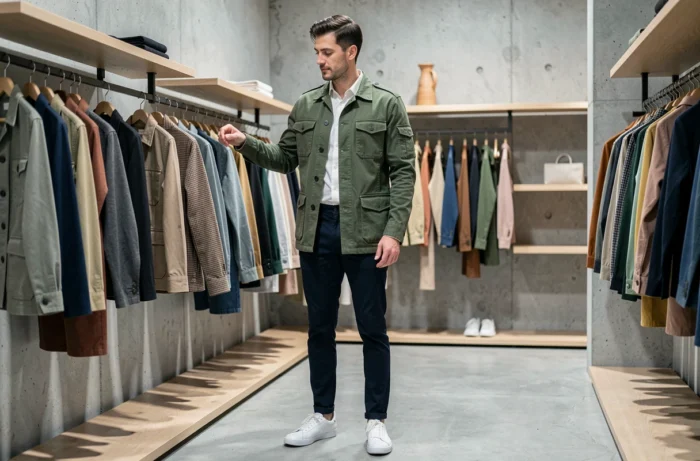
The structured wide pants confirm their place. With a defined waist, ample fall, and sharp cut, they replace slim fits in the daily wardrobe without sacrificing elegance. Paired with a tucked-in shirt or an oversized sweater, they offer a balance between comfort and style.
The coordinated set (matching top and bottom, often in the same material or print) emerges as a quick alternative for outfit composition.
Criteria to Check Before Buying a Trendy Piece
- The precise composition: prioritize natural or recycled fibers identified on the label, and soon on the digital product passport.
- Versatility: a piece that only works with one type of outfit will quickly be abandoned. The wide pants, for example, can be worn with both sneakers and dress shoes.
- The durability of seams and finishes: a garment designed to last several seasons justifies a higher price than its fast-fashion equivalent, intended to be worn a few times.
Fashion Colors and Prints This Season: Controlled Intensity
This season’s colors oscillate between bright shades and natural tones. The butter yellow, spotted in several spring-summer 2026 collections, brings brightness without the saturation of lemon yellow. Olive green and sky blue complement this palette, while pink and orange remain present on key pieces (dresses, short jackets).
In terms of prints, leopard continues its trajectory initiated during the autumn-winter 2025-2026 shows. It is worn in touches (a bag, a belt, a skirt) rather than in a total look. Lace, another trend spotted on the runways, is integrated into structured pieces (shirt collar, dress yoke) to avoid a lingerie effect.
Visual micro-trends are giving way to stable palettes that brands can maintain over several seasons, thus reducing waste related to color changes every three months.
Materials and Textile Eco-Design: What Style Demands Now
The ESPR 2025-2030 work plan directly targets the materials used in clothing. Brands are encouraged to integrate recycled fibers, limit difficult-to-separate material blends, and ensure the reparability of their products.
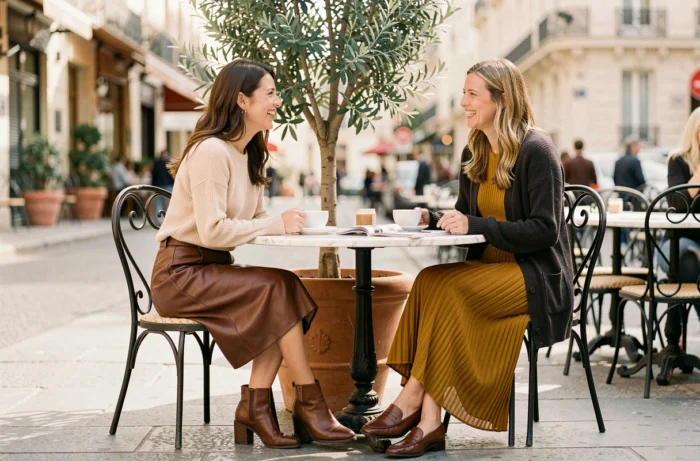
In practice, this translates to a return of raw cotton, linen, and wool in mid-range collections, where blended polyester had recently dominated. Noble materials, once reserved for luxury, are gradually moving down to more accessible segments, driven by the need to meet eco-design requirements.
- Linen: suitable for spring and summer, it wrinkles (which is accepted, even sought after this season) and does not require intensive ironing.
- Certified organic cotton: its traceability will be facilitated by the digital product passport, reassuring about the origin of the fibers.
- Recycled wool: used in oversized sweaters and short jackets, it offers a sufficiently dense weight for mid-seasons without resorting to synthetic fibers.
Sneakers and Accessories: Choices That Extend the Lifespan of the Look
Sneakers remain the default choice to accompany wide pants or a midi skirt. Simple models, with flat soles and made of leather (or vegan leather), are preferred over seasonal limited editions. A well-chosen pair can last through several seasons without looking dated.
Expressive accessories (brooches, oversized earrings, wide belts) allow for refreshing a look without buying new wardrobe pieces. This approach aligns with the logic of restricted collections and recurring capsules that is becoming firmly established in fashion.
This season’s fashion trend can be summed up in a simple trade-off: fewer pieces, better chosen, worn longer. The European regulatory framework accelerates this movement, but style does not suffer. A flowing linen dress, wide cotton pants, a pair of simple sneakers, and a few well-measured accessories make up a complete, traceable wardrobe that will not be obsolete by the next season.