
The LMNP status in senior residences benefits from distinct tax treatment since the finance law for 2025. While the reintegration of depreciation into the capital gains on disposal now affects some furnished rentals, senior residences falling under the legal framework of establishments and services for the elderly are explicitly excluded. This point, codified in Article 150 VB of the CGI, modifies the exit calculation for any investor anticipating a medium-term resale.
Exclusion of depreciation reintegration: what Article 150 VB of the CGI changes
The reform introduced by Article 84 of Law No. 2025-127 of February 14, 2025, has created a clear divide between types of furnished rentals. Classic furnished rentals see their depreciations reintegrated into the calculation of taxable capital gains upon disposal. Senior residences, provided they are linked to the regime of service residences for the elderly, retain the previous mechanism.
In practice, this means that an investor who resells a unit in a senior residence after ten or fifteen years of operation does not suffer the capital gains increase related to the depreciations deducted during the holding period. The tax advantage upon resale remains intact for eligible senior residences. However, we recommend verifying the exact legal status of the residence before acquisition, as not all structures marketed under the name “senior residence” necessarily fall under the protected framework.
For those wishing to invest in senior residences with Crédits et Placements, this legal distinction is a priority selection criterion when preparing the file.
Operator solvency: the real risk of the commercial lease in senior residences
The announced rental yield relies on a commercial lease signed with a single manager. The investor does not rent directly to the resident; they receive rent paid by the operator. The financial strength of the operator determines the regularity of income, not the occupancy rate displayed in the marketing brochure.
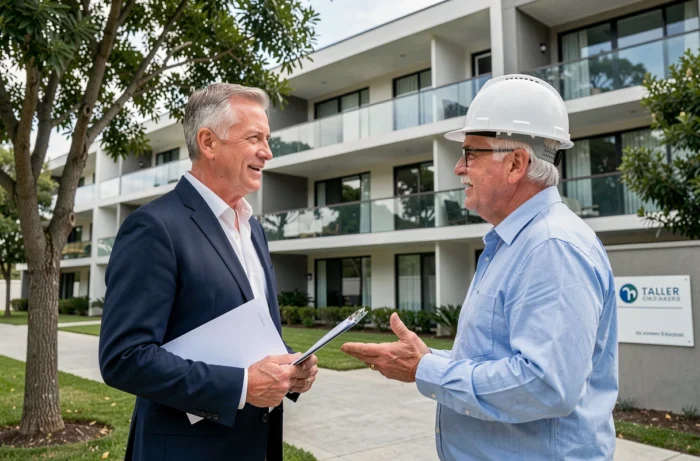
In the event of operator default (collective proceedings, liquidation, forced lease renegotiation), rents may be interrupted or reduced without immediate recourse for the owner. We observe that this reality remains under-documented in the majority of marketing materials.
Before signing, the analysis should focus on several concrete elements:
- The published accounts of the operator and its parent company, checking the debt ratios and self-financing capacity over the last three fiscal years
- The history of past collective proceedings of the group, including on other residences operated by the same operator
- The conditions for lease renewal (duration, rent revision clause, early termination modalities)
- The presence or absence of a replacement operator clause, which allows re-letting the unit to another manager without prolonged income interruption
A nine-year lease with a fragile operator is worth less than a six-year lease with an operator whose financial fundamentals are verifiable.
Net profitability in LMNP: depreciation of the property and actual charges
The gross yield communicated (often expressed as a percentage of the acquisition price) does not reflect the income actually received. The calculation of net profitability includes non-recoverable charges, property tax, and management fees charged by the operator.
The LMNP status allows for the deduction of the depreciation of the property and furniture from the declared rental income. This mechanism reduces, or even eliminates, taxation on rents received for a significant duration. The undeducted portion carries over to subsequent fiscal years, extending the tax advantage well beyond the initial years of operation.
Two items deserve particular attention during the forecast. The first concerns the condominium charges for common areas and shared services, which can represent a significant portion of the gross rent. The second relates to the cost of restoring the apartment between two residents, which is the owner’s responsibility if stipulated in the commercial lease.
We find that the simulations provided by marketers regularly omit these two budget lines. A reliable forecast incorporates them from the outset.
Solidarity dimension and impact on the stock of adapted housing
The aging of the French population generates a structural need for housing adapted to independent seniors. Senior residences position themselves between home care (sometimes unsuitable) and nursing homes (intended for dependent individuals). This intermediate segment remains under-equipped compared to projected demand.

Investing in this type of property directly contributes to increasing the available stock. Each unit financed by a private investor is an additional housing option for an independent senior. The solidarity dimension does not rely on marketing discourse; it mechanically arises from the alignment between private funding and a documented social need.
The economic model of senior residences relies on integrated services (catering, laundry, collective activities) that help prevent isolation. This component of social connection, difficult to quantify in a spreadsheet, is nonetheless a factor of rental stability: a resident satisfied with their living environment renews their contract, reducing vacancy and securing income flow for both the operator and the owner.
Choosing a senior residence as a rental investment aligns a wealth-building objective with measurable social utility. Profitability depends on the seriousness of the prior analysis, not on the promise of guaranteed returns. A solid operator, a properly negotiated commercial lease, and a tax status verified in light of the 2025 finance law form the foundation of a sustainable investment.